The Ultimate Guide to Plastic Machining: 10+ Grades, Process & Molding Alternatives
By The CNMP Expert Team
When designing a plastic component, engineers often face a dilemma: Mold it or Machine it?
While injection molding rules high-volume production, plastic machining is the unsung hero of precision engineering. It is the only way to get tight tolerances, zero tooling costs, and complex geometries without a $10,000 mold investment.
However, plastic machining is deceptively difficult. It requires a completely different understanding of thermodynamics compared to metal.
In this comprehensive guide, we analyze over 10 types of machinable plastics—from cheap prototypes to high-performance aerospace polymers—helping you choose the right material for your project.
The “Big 3” Challenges in Plastic Machining
Why it’s harder than metal.
Before choosing a material, you must understand the risks.
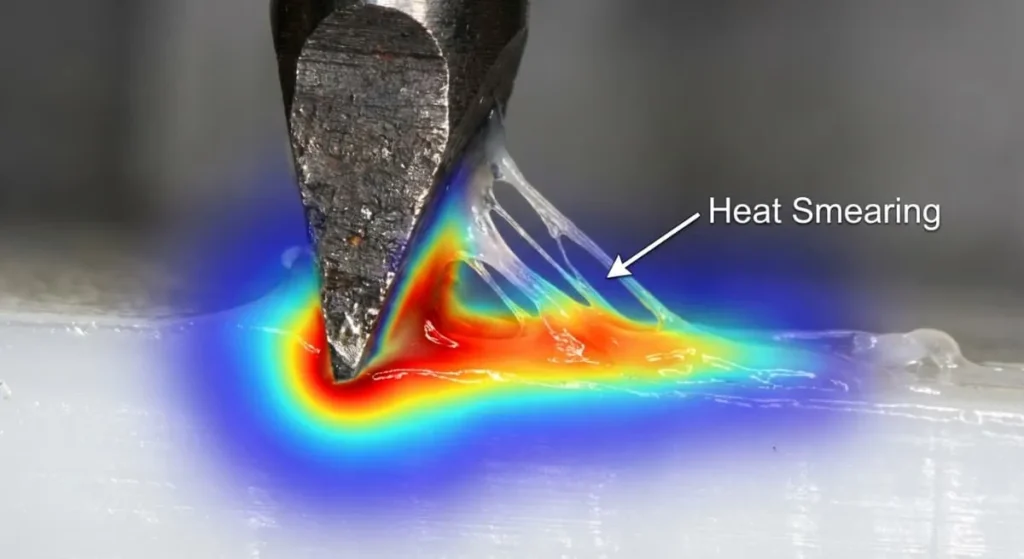
1. Heat Build-Up (The Melting Hazard)
- The Science: Plastics are thermal insulators. unlike Aluminum which dissipates heat, plastics trap heat.
- The Machinist: “If we run a dull tool too fast during plastic machining, the material doesn’t cut—it smears. It melts and re-welds itself behind the cutter.”
2. Internal Stress (The Warping Hazard)
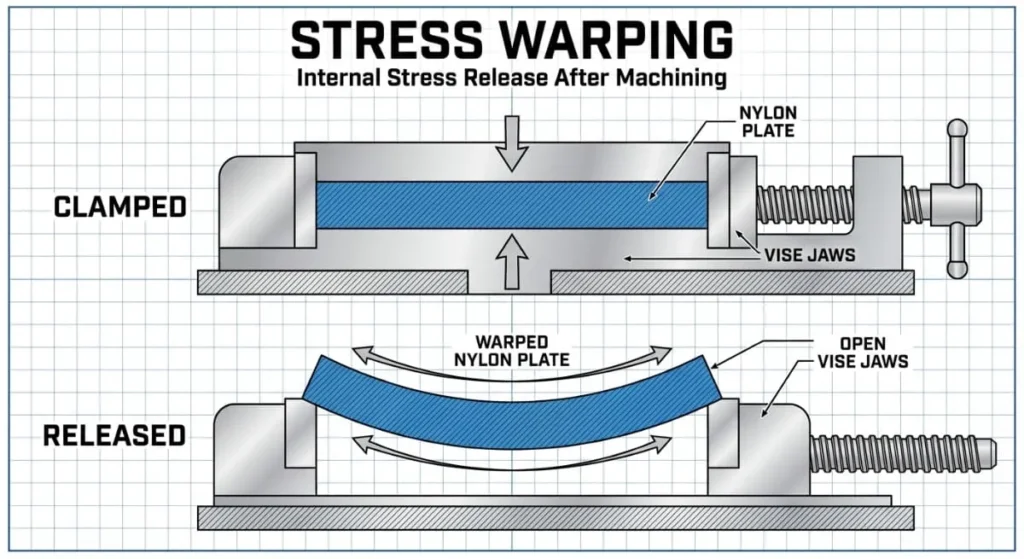
- The Science: Extruded plastics contain massive internal stress. Removing the outer skin releases this stress, causing the part to bow.
- The Fix: We often “Anneal” (stress relieve) the material before the final finishing pass.
3. Clamping Deformation
- The Reality: You cannot crush plastic in a vise like Carbon Steel. It compresses, then expands when released, ruining the tolerance.
Category 1: General Purpose & Prototyping Plastics
Low cost, easy to machine, moderate strength.
ABS (Acrylonitrile Butadiene Styrene)
- The “Lego” Plastic.
- Machinability: 5/5 (Excellent). It cuts cleanly and easily.
- Best For: Impact-resistant housings, prototypes for injection molded parts. It can be easily glued/bonded.
- Expert Note: ABS is the cheapest entry point for plastic machining verification models.
PVC (Polyvinyl Chloride)
- The “Pipe” Plastic.
- Machinability: 3.5/5. Cheap and chemically resistant.
- Warning: It releases Chlorine gas if burned or cut too hot (corrosive to machines).
- Best For: Chemical tanks, manifolds, plumbing fittings.
Acrylic (PMMA)
- The “Glass” Substitute.
- Machinability: 2.5/5 (Brittle). It creates clear chips but cracks easily if the tool grabs.
- Best For: Light pipes, screens, display cases. Easier to polish than PC.
Category 2: Engineering Plastics
The workhorses of industry. Balanced performance.
POM / Acetal (Delrin)
- The Machinist’s Favorite.
- Machinability: 5/5. High stiffness, low friction, short chips. It holds the tightest tolerances of any plastic (±0.02mm).
- Best For: Precision gears, bushings, sliding guides.
Nylon (PA6 / PA66)
- The “Tough” One.
- Machinability: 3.5/5. Creates long, stringy chips (“bird nests”).
- The Trap: Nylon is hygroscopic (absorbs water). A part machined to spec today might expand tomorrow in humid air.
- Best For: Wear pads, rollers, high-impact parts.
UHMW-PE (Ultra-High Molecular Weight Polyethylene)
- The “Slippery” One.
- Machinability: 2/5 (Tricky). It is so slippery and waxy that it’s hard to clamp. It doesn’t cut crisply; it tears.
- Best For: Conveyor guide rails, food processing chutes (FDA safe).
PET / PET-P (Ertalyte)
- The “Stable” Nylon Alternative.
- Performance: Similar strength to Nylon but absorbs ZERO moisture. Ideal for precise wet environments.
- Best For: Food machinery parts, valves.
Category 3: High-Performance & Clear Plastics
Extreme heat, clarity, or chemical resistance.
Polycarbonate (PC)
- The “Bulletproof” Clear.
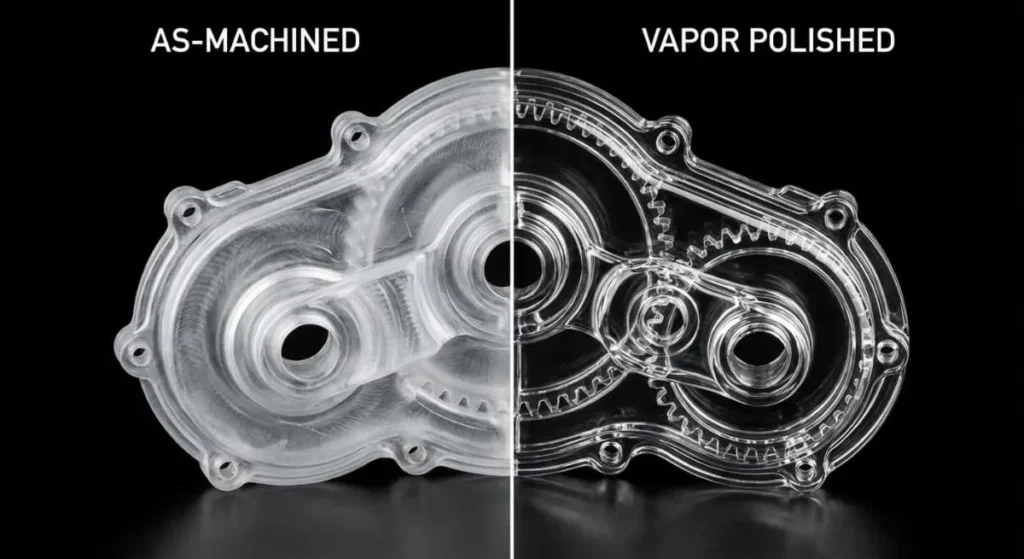
- Machinability: 3/5. Tougher than Acrylic but harder to polish.
- Finish: Requires Vapor Polishing to restore clarity after plastic machining.
PEEK (Polyetheretherketone)
- The “Metal Replacement”.
- Performance: Withstands 260°C (500°F). Strong, stiff, and chemical resistant.
- Machinability: 4/5. Cuts beautifully (like hard wood) but is extremely expensive ($$$$).
- Comparison: If you need heat resistance but PEEK is too expensive, consider Stainless Steel 316.
- Best For: Medical implants, semiconductor parts, aerospace insulators.
Ultem (PEI)
- The “Amber” PEEK.
- Performance: Slightly lower temp rating than PEEK, but cheaper and translucent amber color. Excellent dielectric strength.
- Best For: Aircraft electrical connectors.
PTFE (Teflon)
- The “Softest”.
- Machinability: 2/5. Cuts like cold butter. Very hard to hold dimensions because it deforms under any pressure.
- Best For: Seals, gaskets, chemical liners.
Category 4: Composites (The Tool Killers)
Fiber-reinforced plastics.
G10 / FR4 (Garolite)
- The Science: Epoxy resin reinforced with glass cloth.
- The Hazard: It is not “cutting” plastic; it is “grinding” glass. It destroys standard tools in minutes. We must use Diamond-coated tools.
- Safety: Produces dangerous glass dust (requires respirators).
- Best For: PCB insulation boards, high-voltage spacers.
Selection Matrix: Choosing the Right Grade
| Material | Cost | Heat Limit | Tolerance | Best Feature |
| ABS | $ | 70°C | Good | Cheap, Glueable |
| POM | $$ | 90°C | Best | Stable, Low Friction |
| Nylon | $$ | 100°C | Fair | Tough, Wear Resist |
| UHMW | $$ | 80°C | Poor | Slick, Abrasion Resist |
| PC | $$ | 120°C | Good | Transparent, Impact |
| PEEK | $$$$$ | 260°C | Excellent | Extreme Performance |
| G10 | $$$ | 140°C | Good | Electrical Insulation |
Expert Advice: Tolerance Expectations
Plastic is not Metal. Tolerances of ±0.01mm are extremely risky.
- For POM/PEEK, aim for ±0.05mm.
- For Nylon/UHMW, aim for ±0.10mm.
Ready to start?
Contact CNMP to get a DFM review for your plastic machining project.