
CNC Turning Services / Hybrid Machining
CNC Turning and Milling Services for Complex Turned Parts
CNMP provides CNC turning and milling services for custom parts that begin with a round, coaxial, or lathe-turned form and also need milled, drilled, tapped, or off-axis features.
Best fit
Turned shafts, sleeves, fittings, pins, and housings that also need flats, slots, cross holes, ports, or side threads.
Route review
CNMP checks whether the part needs turning only, secondary milling, live tooling, mill-turn, or a milling-led route.
Buyer focus
Datum transfer, feature orientation, burr control, tolerance stack-up, surface finish, and inspection documents.
RFQ support
Send drawings, models, material, quantity, finish, critical features, and release-document requirements for review.
Route decision first
Turned base shape plus off-axis features can change setup count, inspection method, lead time, and quote accuracy.
When CNC Turning and Milling Services Are Needed
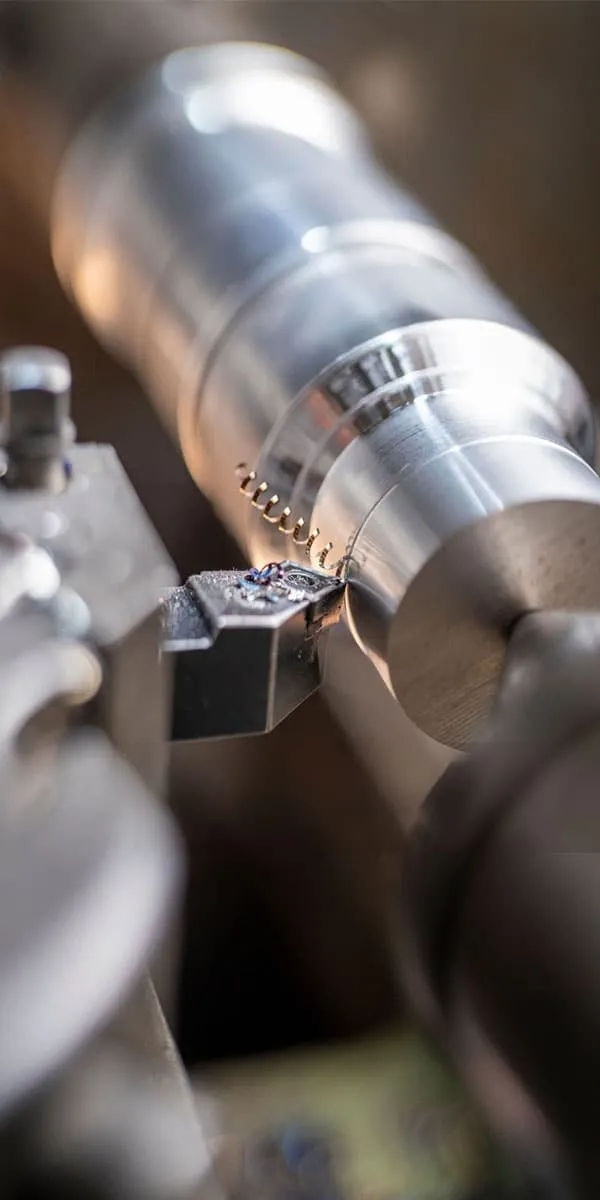
CNC turning and milling services are used when a part has lathe-turned features plus milled, drilled, tapped, or off-axis features that cannot be completed by turning alone.
Turned OD / ID
Round or coaxial base geometry with milled flats.
Side features
Cross holes, side holes, ports, and side threads.
Slots and keyways
Keyways, slots, grooves, and wrench features.
Round housings
Pockets, mounting faces, and controlled orientation.
Process Route
Choose the Right CNC Machining Route
Choosing the process route early helps reduce quote assumptions, setup risk, and inspection surprises. CNMP reviews drawings to decide whether a part is turning-led, milling-led, or better suited for a combined route.
Some projects benefit from fewer setups, especially when milled features must stay aligned with turned diameters. Other projects can be made reliably with turning first and secondary milling after.
Process route
Good fit
Buyer should check
CNC turning only
Shafts, pins, bushings, spacers, threaded round parts
OD / ID tolerance, runout, thread quality, surface finish
Turning plus secondary milling
Round parts with flats, slots, cross holes, ports, or side threads
Datum transfer, feature orientation, burr control, setup repeatability
Live tooling CNC turning
Turned parts with limited milling or drilling features in the lathe setup
Tool access, part diameter, part length, feature depth, tolerance stack-up
Mill-turn machining
Parts needing several turning, drilling, tapping, or milling operations with fewer transfers
Machine capacity, chucking or bar-fed route, secondary spindle or turret needs
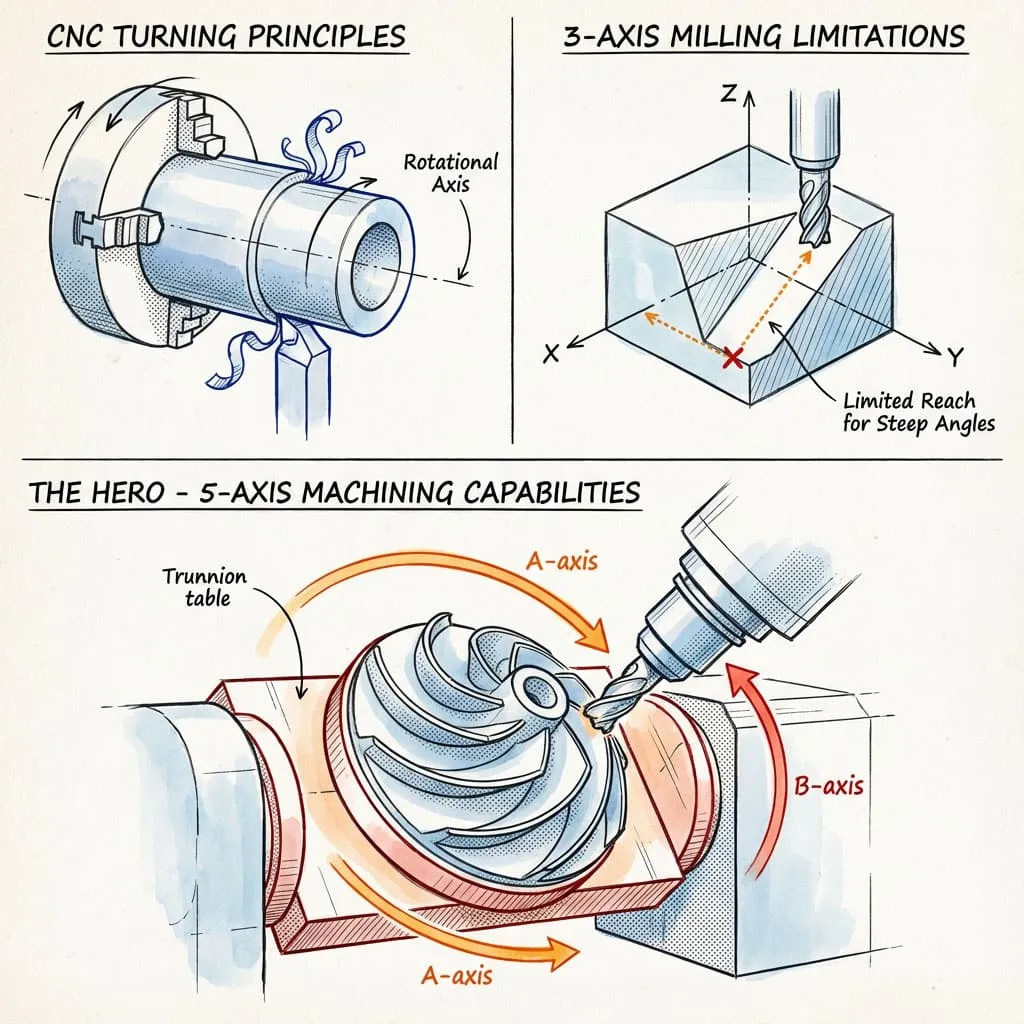
5-axis CNC machining
Milling-led parts with complex multi-face geometry or hard-to-reach features
Whether the part is truly turning-led or should be planned as a milling project
Part Fit
Parts CNMP Can Quote for Turning Plus Milling
CNMP supports custom CNC machining for parts that need turning plus added milled or drilled features. Common project types include functional components for machinery, automation equipment, electronics, fluid systems, industrial assemblies, and custom hardware.
Shafts and Pins
Turned shafts with milled flats, wrench features, keyways, grooves, or cross holes.
Sleeves and Bushings
Sleeves and bushings with slots, ports, milled faces, drilled holes, or edge-break requirements.
Fittings and Connectors
Threaded fittings and round connectors with turned OD / ID, sealing faces, side holes, or tapped features.
Round Housings
Round housings that require turning, drilling, milling, pocketing, and inspection control.

Route Boundary
Turning-Led, Milling-Led, or 5-Axis?
Not every complex part should be forced into a turning and milling route. If the main geometry is a flat bracket, plate, block, or multi-face housing, CNC milling services may be the stronger process path.
If the part depends on turned diameters, bores, shoulders, threads, and coaxial features, a turning-led route is usually the first route to review. If the part has freeform surfaces or hard-to-reach multi-face geometry, 5-axis CNC machining may be more suitable.
Design and Inspection
Control Points for Hybrid Turned Parts
Hybrid turned parts can fail in small details: a cross hole slightly out of position, a flat rotated from the datum, a burr left at a side port, or a thread that passes gauge inspection but fails in assembly.
Concentricity, Runout, and Datum Transfer
Turned diameters, bores, shoulders, and grooves are often tied to the same centerline. Milled features may need to stay aligned with those turned features.
Cross Holes, Flats, Slots, and Side Threads
Include orientation, thread depth, gauge expectation, and feature tolerance when side features affect fit or function.
Surface Finish, Edge Breaks, and Burr Control
Turned surfaces and milled surfaces may need different finish requirements, edge breaks, and inspection methods.
Materials and Finishing
Material and Finish Review for Combined Machining
Material choice affects machining route, tool access, burr behavior, surface finish, and lead time. CNMP can review material requirements with the drawing and quote package.
Aluminum alloys
Stainless steel
Carbon steel
Alloy steel
Brass and copper
Titanium when suitable
POM, nylon, PTFE, PEEK
For finishing, buyers can specify anodizing, plating, passivation, polishing, bead blasting, heat treatment, coating, or marking when required by the drawing.

Quality Documents
Inspection Documents and Repeat Production Support
Turning plus milling projects may need more inspection control than simple round parts. A turned diameter may control fit, while a milled flat or cross hole controls assembly orientation. Inspection should match the part’s functional risk.
Dimensional report
Drawing-based dimensional inspection report.
CMM report
CMM report for critical geometry when required.
FAI
First Article Inspection for approval.
Material certificate
Material certificate and traceability records.
Finish report
Surface finish or coating report when applicable.
PPAP
PPAP when project requirements call for it.
RFQ Checklist
CNC Turning and Milling RFQ Checklist
A complete RFQ helps suppliers decide whether the part needs turning only, turning plus secondary milling, live tooling, mill-turn machining, or another CNC route.
RFQ item
What to send
Why it matters
2D drawing
PDF with tolerances, datum references, threads, surface finish, and critical dimensions
Controls inspection and avoids quote assumptions
3D model
STEP / STP file or another accepted CAD format
Helps programming and process route review
Material
Grade, standard, hardness, and certificate requirement
Affects machinability, cost, sourcing, and inspection
Quantity
Prototype, pilot, and production quantity
Changes setup cost, unit price, lead time, and fixture planning
Critical features
Cross holes, flats, slots, keyways, side threads, ports, sealing faces
Helps decide turning only, secondary milling, live tooling, or mill-turn
Tolerance and GD&T
General tolerance plus critical feature tolerance
Guides fixture, setup, and inspection planning
Surface finish
Ra value, cosmetic requirement, anodizing, plating, passivation, polishing, coating
Affects machining route, finishing vendors, and final inspection
Inspection documents
CMM, FAI, PPAP, material certificate, traceability, dimensional report
Aligns release expectations before production
Application notes
Fit, sealing, rotation, load, assembly, fluid contact, industry requirement
Helps identify function-critical risks
Request a CNC Turning and Milling Quote
If your part has a turned base shape plus milled, drilled, tapped, or off-axis features, CNMP can review your drawing and help determine the practical machining route.
CNMP Support
Why Work With CNMP for Turning and Milling Projects
CNMP is a China-based custom CNC machining supplier for buyers who need drawing-based production, process route review, and export-ready communication. Projects can include prototypes, small batches, and repeat production, depending on drawing requirements, material availability, and inspection needs.
Turning and Milling Under One RFQ Path
CNMP can review turning, secondary milling, live tooling, mill-turn, and milling-led route options from the same drawing package.
Material and Finish Coordination
Buyers can specify material grade, finish, post-processing, inspection documents, and packaging needs before production.
Inspection Support
Dimensional reports, CMM reports, FAI, material certificates, PPAP, and traceability can be discussed when project requirements call for them.
Related Services
Related CNC Machining Services
CNC Turning Services
Shafts, bushings, pins, threaded round parts, and other lathe-turned components.
CNC Milling Services
Plates, brackets, housings, pockets, contours, and milling-led geometry.
5-Axis CNC Machining
Complex multi-face or hard-to-reach geometry that is better treated as milling-led.
Lathe vs Mill
A machining-method guide for buyers comparing turning, milling, and combined processes.
FAQ
Questions About CNC Turning and Milling Services
What are CNC turning and milling services?
CNC turning and milling services support parts that need lathe-turned features plus milled, drilled, tapped, or off-axis features. The part may begin as a shaft, sleeve, fitting, connector, or round housing, then require flats, slots, cross holes, ports, side threads, or mounting faces.
When should a part use turning plus secondary milling?
A part should use turning plus secondary milling when the base geometry is round or coaxial, but the drawing also includes features that a lathe operation alone cannot finish. Common examples include milled flats, cross holes, keyways, slots, ports, and side threaded holes.
Is mill-turn machining the same as 5-axis CNC machining?
No. Mill-turn machining is usually turning-led and adds milling, drilling, or tapping features to a turned part. 5-axis CNC machining is often milling-led and is used for complex multi-face or hard-to-reach geometry.
Can CNMP quote parts that need both turning and milling?
Yes. Buyers can send 2D drawings and 3D models for CNC turning and milling services. CNMP can review the part geometry, material, tolerance, finish, inspection requirements, and quantity before suggesting a machining route.
What should I send for a CNC turning and milling quote?
Send a 2D drawing, 3D model, material grade, quantity, tolerance requirements, datum notes, critical features, surface finish, inspection document requirements, and application notes. Mark cross holes, flats, slots, side threads, sealing faces, and fit-critical diameters clearly.
What inspection documents can be requested?
Depending on project requirements, buyers can request dimensional reports, CMM reports, First Article Inspection, material certificates, PPAP, finish reports, heat treatment certificates, and traceability records. Document needs should be included in the RFQ before production.