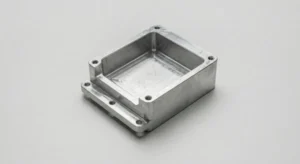
“CNC Stainless Steel” is not a single material. It is a massive family of alloys containing at least 10.5% Chromium.
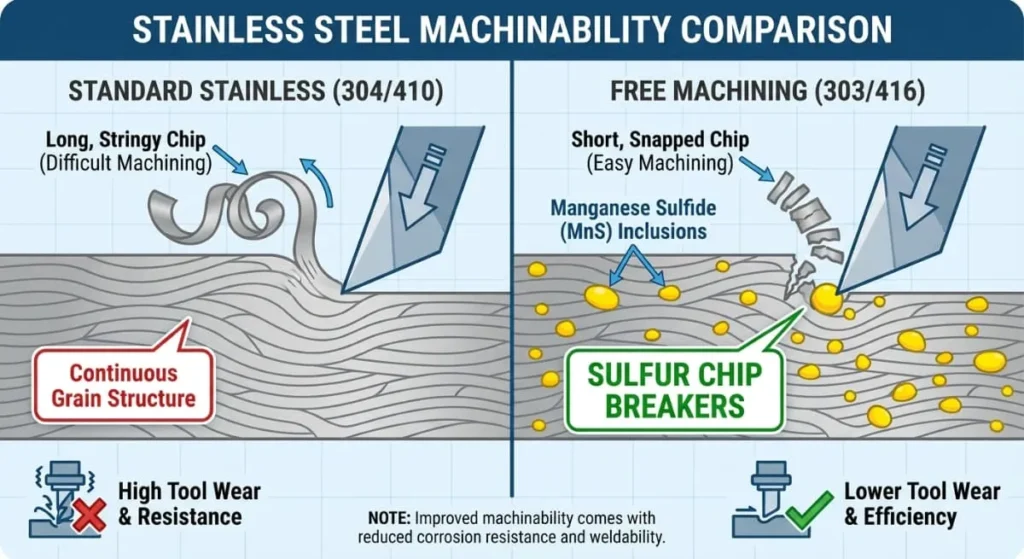
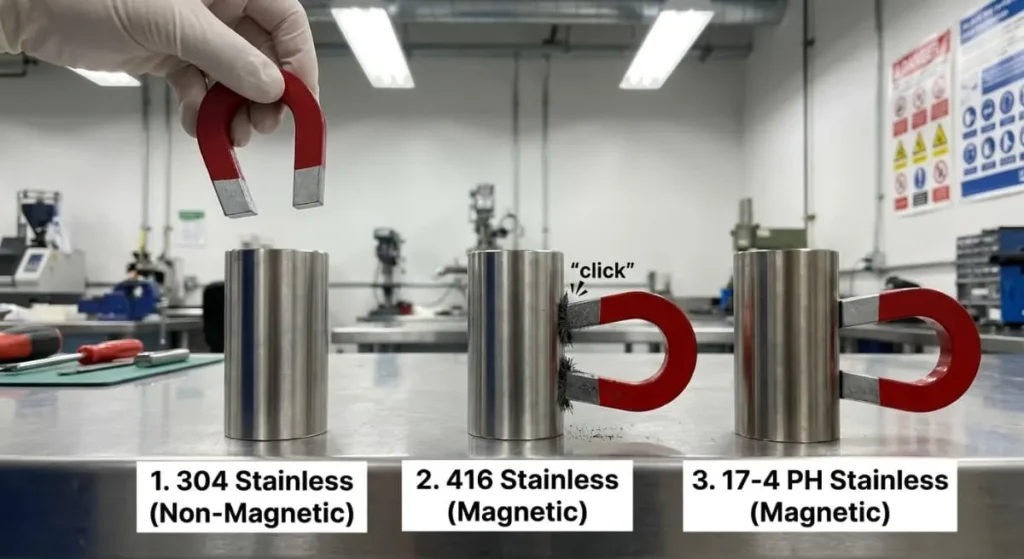
In CNC machining, the difference between AISI 304 and AISI 416 is night and day. One produces long, gummy, tool-breaking strings; the other breaks into tiny chips and cuts twice as fast. One is non-magnetic; the other sticks to a magnet.
To help you make the right engineering decision, we have broken down the Stainless Steel world into its 4 Microstructural Families. We analyze them by their Chemical Designation (the recipe) and their Machinability (the cost).
Family 1: The Austenitic Series (300 Series cNC stainless Steel,like 304,304,316 )
The “Classic” Stainless. High Corrosion Resistance. Non-Magnetic (mostly).
1. AISI 303 (UNS S30300)
The “Free-Machining” Champion of CNC Stainless Steel.
The Scientist: “Modified 304. We add Sulfur (0.15% min) or Selenium. The Sulfur forms Manganese Sulfide inclusions that act as microscopic stress risers, causing chips to break.”
The Machinist: “Rating: 5/5. If you don’t need welding, USE THIS. It cuts 30-40% faster than 304 and saves tool life. It’s the closest stainless comes to machining like carbon steel.”
Warning:Cannot be welded (Hot cracking). Slightly lower corrosion resistance than 304.
2. AISI 304 / 304L (06Cr19Ni10)
The “18/8” Standard.
The Scientist: “Contains 18% Chromium, 8% Nickel. The ‘L’ stands for Low Carbon, which prevents carbide precipitation during welding.”
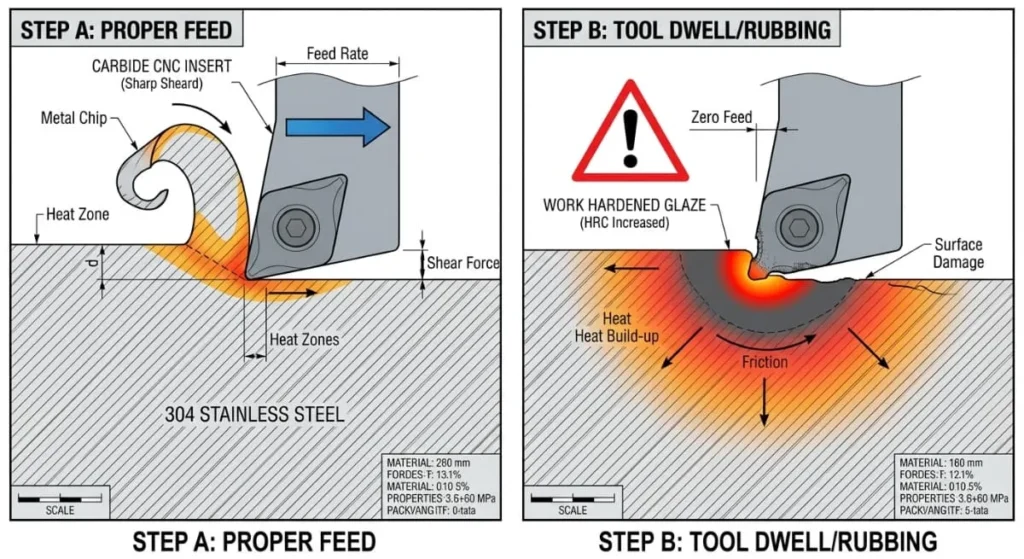
The Machinist: “Rating: 2.5/5. The ‘Gummy Bear.’ It work-hardens instantly. If the tool rubs, the surface glazes over. Requires rigid setups and aggressive feeds.”
3. AISI 316 / 316L (022Cr17Ni12Mo2)
The “Marine” Upgrade.
The Scientist: “The magic ingredient is Molybdenum (2-3%). This dramatically increases resistance to pitting corrosion from chlorides (saltwater).”
The Machinist: “Rating: 2/5. Tougher than 304. Cycle times are slower. Tools wear out faster. Expect a higher part cost.”
Family 2: The Martensitic Series (400 Series CNC Stainless Steel)
Magnetic. Heat Treatable. High Strength. Moderate Corrosion Resistance.
4. AISI 410 (1Cr13)
The General Purpose Hard-Steel.
The Scientist: “Basic martensitic grade. Low alloy, 11.5% Chromium, no Nickel. Can be heat-treated to gain high strength and hardness.”
The Machinist: “Rating: 3/5. Machines decently in the annealed state. Often used for parts that need to be hardened after machining (like bolts or shafts).”
Best For: Turbine blades, pump shafts, fasteners.
5. AISI 416 (Y1Cr13)
The “Free-Machining” Martensitic.
The Scientist: “Just like 303 is to 304, 416 is to 410. We add Sulfur to make it machinable. It has the highest machinability of any CNC stainless steel (approx. 85% of carbon steel).”
The Machinist: “Rating: 5/5. We love this material. It cuts fast, leaves a great finish, and can still be hardened. If you need a hard, magnetic, cheap stainless bolt, this is it.”
Best For: Axles, gears, screws, valves.
6. AISI 440C (11Cr17)
The “Razor Blade” Steel.
The Scientist: “High Carbon (1.0%) + High Chromium (17%). This creates massive chromium carbides. It can reach extreme hardness (HRC 58-60) after heat treatment.”
The Machinist: “Rating: 1/5. Abrasive. Even in the soft state, the carbides eat tool tips. We machine it, then heat treat, then grind to final size.”
Best For: Ball bearings, surgical instruments, knife blades.
7. AISI 420 (2Cr13 / 3Cr13)
The “Mold” Steel.
The Scientist: Higher carbon than 410. Offers a balance of wear resistance and toughness.
Best For: Plastic injection molds, cutlery.
Family 3: The Ferritic Series (400 Series CNC Stainless Steel)
Magnetic. Non-Heat Treatable. Cheaper.
8. AISI 430 (1Cr17)
The “Decorative” Alternative.
The Scientist: “High Chromium, ZERO Nickel. Since Nickel is expensive, 430 is cheaper than 304. Good corrosion resistance in mild environments.”
The Machinist: “Rating: 3/5. Soft and gummy (like pure iron). Can be annoying to get a perfect finish because it drags.”
Best For: Automotive trim, refrigerator panels, cheap appliance parts.
Family 4: Precipitation Hardening (PH CNC Stainless Steel)
The Best of Both Worlds: Corrosion Resistance of 304 + Strength of 410.
9. 17-4 PH (AISI 630 / 0Cr17Ni4Cu4Nb)
The Aerospace Superstar.
The Scientist: “The name says it all: 17% Cr, 4% Ni, 4% Cu (Copper). The Copper precipitates out during heat treatment to lock the grain structure. It combines high strength with corrosion resistance rivaling 304.”
The Machinist: “Rating: 3.5/5. Surprisingly friendly. We machine it in ‘Condition A’ (Annealed). It cuts cleanly. Then we bake it at 900°F (H900) for 1 hour to harden it to HRC 40-44. The best part? Almost zero distortion during heat treat.”
Best For: Aerospace fittings, chemical processing shafts, heavy-duty latches.
10. 15-5 PH (0Cr15Ni5Cu4Nb)
The “Tougher” 17-4.
The Scientist: “Very similar to 17-4, but ‘Vacuum Arc Remelted’ (VAR) to remove impurities and create a finer grain structure. It has better toughness (impact resistance).”
Best For: Critical aircraft components where 17-4 might fail.
Quick Reference: The Machinist’s “Cheat Sheet”
Grade
Common Name
Chemical Code (Approx)
Magnetism
Machinability
Best For
303
Free-Machining
1Cr18Ni9 + S
NO
Excellent
Turned parts, Fittings (No Welding)
304
The Standard
06Cr19Ni10
NO
Difficult (Gummy)
General Enclosures, Food
316
Marine Grade
022Cr17Ni12Mo2
NO
Difficult (Tough)
Saltwater, Medical
416
FM Martensitic
Y1Cr13 + S
YES
Excellent
Hardened Screws, Gears
410
Basic Martensitic
1Cr13
YES
Good
General High Strength Parts
440C
Bearing Steel
11Cr17
YES
Poor (Abrasive)
Bearings, Cutters
17-4
630
0Cr17Ni4Cu4
YES
Good
Aerospace, High-Precision Shafts
Unsure if you need CNC Stainless Steel or Aluminum? Compare them in our Materials Selection Hub.
Expert Advice: The 416 Secret Weapon
From the Shop Floor:
“Engineers often forget about AISI 416 CNC Stainless Steel. If you need a steel part that is hard, strong, and magnetic, don’t default to Carbon Steel (which rusts) or 17-4 (which is expensive).
Try 416 CNC Stainless Steel. It is stainless (won’t rust easily), it hardens well, and it machines incredibly fast. It is the unsung hero for sensor housings and motor shafts.”
Conclusion: Specificity Saves Money
The difference between specifying “CNC Stainless Steel” and “AISI 416” can be a 50% cost reduction in machining time.
At CNMP, we analyze your chemical requirements (UNS/AISI) to suggest the most machinable grade that meets your specs.
Need high hardness + corrosion resistance? We might suggest 17-4 PH.